Why Reconstruction Is Human Before It Is Technical
When people hear “reconstruction,” they often picture cranes and concrete. But the most meaningful rebuilding begins long before any site is fenced or a beam is lifted. It starts with listening—mapping community priorities, constraints, and hopes. In Syria and beyond, our teams approach each project as a human story: a clinic that needs reliable power to refrigerate medicine, a school that must be structurally safe before the next term, a neighborhood whose public spaces can restore a sense of normal life.
These rebuilding stories trace how engineering choices translate into daily impact. They document what works, what doesn’t, and why—so the next decision is clearer, the next project more resilient, and the next outcome more inclusive.
From Field Notes to Practical Action
Human-centered reconstruction turns information into action. We combine specialized engineering consulting and studies with on-site validation: surveying damage, testing materials, modeling structural options, and comparing life-cycle costs. The result isn’t just a drawing set; it’s a sequence of practical steps that neighborhoods, partners, and investors can trust.
A typical reconstruction story includes:
- Needs Assessment: Who benefits? What is the current pain point—safety, energy, water, access?
- Design Choices: Which materials, systems, and standards deliver the best long-term value with local maintenance capacity?
- Sustainability Lens: How do we reduce energy demand, integrate renewable energy where viable, and keep operations affordable?
- Execution in Context: Which contractors, supply chains, and phasing strategies minimize disruption?
- Measured Impact: What changes for people the day we hand over—comfort, safety, cost savings, uptime?
This documentation culture turns projects into reusable knowledge, allowing future sites to avoid pitfalls and repeat successes.
Engineering With Dignity: Stories That Matter
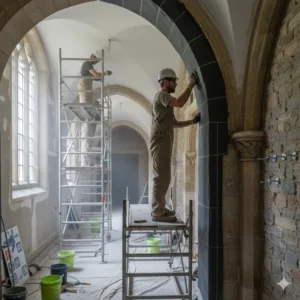
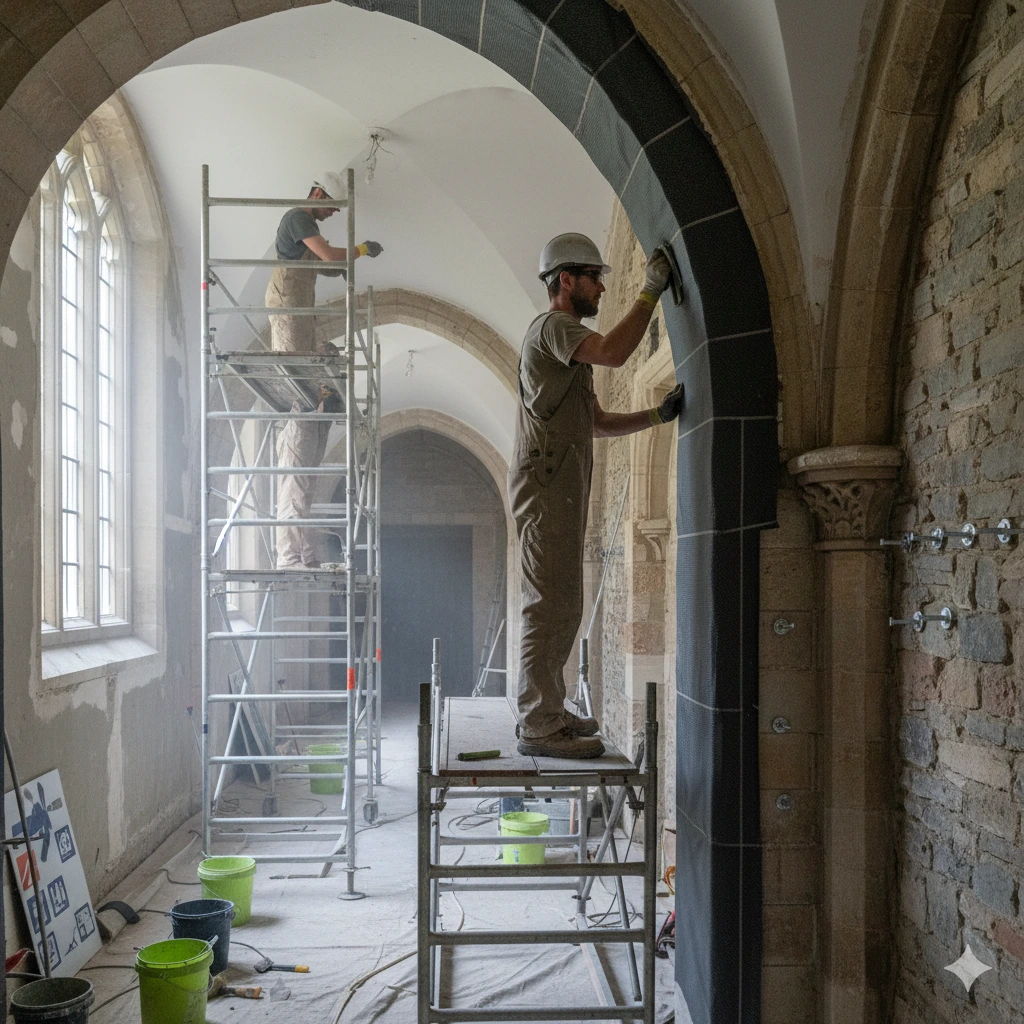
Reconstruction stories are not press releases; they are learning tools. One narrative might explore how a damaged school was strengthened with restoration and renovation methods that respect heritage while meeting modern codes. Another might follow a construction & infrastructure upgrade where smart phasing kept water flowing and streets passable during works. A third could profile a clinic that transitioned to a sustainable energy system—pairing efficient equipment with rooftop solar to stabilize power and lower operating costs.
Across these cases, three principles stay constant:
- Quality: Rigorous standards, peer review, and transparent criteria for materials and methods.
- Innovation: Practical, context-aware solutions—modular components, hybrid energy, prefabricated elements—deployed where they add real value.
- Sustainability: Designs that cut waste, simplify maintenance, and extend asset life—so communities spend less to get more over time.
Where People Live, Work, and Learn
Reconstruction happens in real places, with real constraints. That’s why our stories span:
- Housing & Mixed-Use: Seismic checks, envelope repairs, and efficient HVAC bring buildings back safer and cheaper to run.
- Education & Health: Structural reinforcement, indoor air quality measures, and renewable energy improve uptime and learning/health outcomes.
- Public Infrastructure: Streets, drainage, and utilities designed for accessibility, resilience, and low maintenance.
- Water & Wells: Drilling and well planning that balances groundwater protection with community needs, guided by geotechnical studies.
- Materials Supply: Reliable tools and materials procurement that keeps schedules honest and quality consistent.
- Urban & Community Development: Pocket parks, lighting, and wayfinding that make neighborhoods feel safer and more connected.
- Real-Estate Marketing: Transparent storytelling and data that attract aligned investors to viable, well-documented projects.
Each success is cumulative: safer cores enable better schools; efficient clinics free budget for staff; restored streets encourage small businesses. This is community impact you can measure and feel.
Sustainable Rebuilding: Energy at the Core
Power instability can undermine even the best reconstruction plans. Our stories therefore often focus on sustainable energy solutions—not as an add-on, but as foundational design. By cutting loads first (insulation, high-efficiency equipment) and adding the right mix of solar, storage, and smart controls, we turn volatile energy into predictable service. The payoff is resilience: clinics keep vaccines cold; classrooms stay lit; water pumps run when they’re needed most.
Key takeaways:
- Start with demand reduction; it’s the cheapest kilowatt-hour you’ll ever “buy.”
- Design for maintainability with locally available skills and spares.
- Model life-cycle cost, not just capex; the lowest bid can be the most expensive over time.
- Build training into handover so local teams own the system from day one.
Transparent Methods, Transferable Lessons
Our rebuilding stories are written for practitioners and partners: municipalities, NGOs, developers, EPCs, and community leaders. We share checklists, simple decision trees, and references to standards where appropriate—so readers can adapt lessons to their own sites. When we publish failures or “near misses,” it’s because transparency shortens the learning curve for everyone and protects communities from repeat mistakes.
Expect articles that include:
- Checklists & Benchmarks: quick ways to gauge readiness and risk.
- Before/After Drawings & Photos: showing what changed and why.
- Bill of Materials (BOM) Insights: where quality matters most and what can be substituted.
- Maintenance Playbooks: tasks, intervals, and escalation paths.

How Following Our Blog Helps You
Whether you are an investor, engineer, or project initiator, staying close to these narratives will help you:
- Frame realistic scopes and budgets early.
- Choose resilient materials and construction methods.
- Integrate renewable energy intelligently, not decoratively.
- Structure procurement to ensure quality and on-time delivery.
- Track impact with simple, meaningful metrics communities care about.
If you manage portfolios, these lessons will help you compare sites fairly, allocate capital where it matters most, and shorten the path from plan to progress.
FAQs
What is human-centered reconstruction?
An approach that begins with community needs and context, then selects designs, materials, and phasing that deliver measurable daily benefits with sustainable operations.
How do sustainable energy systems support reconstruction?
By reducing operating costs and volatility, ensuring critical services (clinics, schools, water) remain available, and increasing long-term resilience.
Can lessons from one project transfer to another?
Yes—if they’re documented. Our reconstruction stories emphasize methods and metrics that can be adapted across sites and sectors.
If you’re exploring a project—housing, infrastructure, restoration and renovation, or sustainable energy—browse our latest stories, then request a consultation. Together, we can turn constraints into clear steps, and engineering into lasting community benefit.
Subscribe to the blog for new field notes, case narratives, and engineering guides that move communities from risk to resilience.